
In this digital era, digital transformation is everywhere, even in manufacturing. Factories are incorporating AI, IoT, RFID, automation, cloud platforms, and real-time production systems. But the main question is why are you doing it?
What is the main goal? To produce more products in minimum time or to change how your whole factory works?
The answer is not simple, like selecting productivity or change. The main aim of digital transformation in manufacturing is to change how operations work in your factory to get better results.
Only technology advancement cannot transform a factory. You may install the latest software or follow the same old processes. But real transformation occurs when technology shows how you see the issues, make decisions, and then take action. That is the main difference that matters.
What Does Digital Transformation in Manufacturing Really Mean?
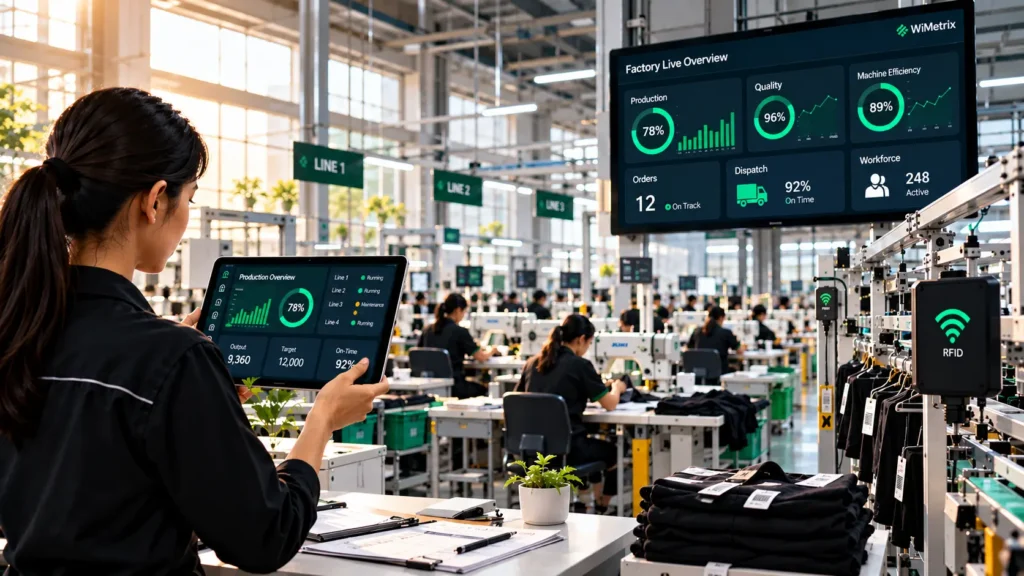
The concept of digital transformation in manufacturing is still confused with adding a new technology. You simply replace paper reports with digital reports and install sensors on your factory machines. You may introduce a new digital dashboard. You may automate a few manual tasks. These advancements are useful, but only these things can’t depict the complete idea of manufacturing digital transformation.
Digital transformation is much deeper. It connects everything; people processes, machines, and production data. It changes the main thing that how you use that information to run your factory operations. This connection is the major part of smart manufacturing and also an important decision towards more connected operation of factories.
Suppose your production team manually prepares reports at the end of each shift. Now you digitize those reports which is great. You lessen the paper work. But even after doing that your managers are still finding problems at the end of the shift when that problem already happened.
Now assume that production information shows live data. Your team can see a bottleneck. A supervisor can make decisions and react before the bottleneck affects the complete production line. That is the bigger transformation.
You are not only making the existing system digital. What you are changing is how decisions are happening.
Productivity Is Important, But Is It the Real Goal?
All manufacturers desire to increase manufacturing productivity. More output than input is expected. You want machines to work better. You want to reduce the amount of time spent waiting for information by your employees. Also, you want to minimize waste, delays, defects and unnecessary costs.
Therefore, productivity is naturally connected with digital transformation in manufacturing. Improved visibility and connected processes can also help to increase operational efficiency. But productivity is not the only yardstick of digital success.
Think of a basic instance. A new digital production system is introduced in a factory. Management hopes efficiency will go up right away. The system is working properly, but employees are still using spreadsheets alongside it.
Supervisors continue to rely on phone calls to find information. Managers maintain yesterday’s reporting, and continue to make decisions. Now, the factory is technologically equipped with digital technology, but has it really changed?
Not quite. Technology has changed, but not how people work.
Real Transformation Changes How You Work
This is where the term “transformation” also comes into play. Digital transformation should evoke a real change in your operations. May alter your speed of problem identification in production. It could also change interdepartmental communication.
It could affect management decision making. It could alter the way that operators get instructions during production. This transformation paves the way for sustained productivity and improved manufacturing processes.
You stop asking: “How can this technology make us faster?
Rather, it is a question you begin to ask yourself: “How does this technology enable us to work better?”
It can mean a lot more than just a thing of thought.

From Data Collection to Better Decisions
There’s a lot of data out there that can be created in a modern factory. Machines create data. Data is produced by production lines. Quality teams develop data. Data is generated by planning systems. Single production activities can generate useful information.
Now the most difficult part is not to gather this information. The difficulty lies in what to do with it. This is where manufacturing data analytics and connected production systems can be helpful.
One dashboard may alert you that production efficiencies have declined today. That’s a helpful piece of information. What about the other way around, though? Are you able to pinpoint the slowdown? Do you know why it occurred?
Does the right person get that info ASAP? Most importantly, can someone do something before the issue escalates?
That’s when digital transformation in manufacturing really begins to pay off. The aim isn’t just to view more data. The objective is to make better decisions based on that data.
Real-Time Production Visibility Changes the Game
Traditional manufacturing reports frequently tell what happened on the last day. However, the problems of the past are not always addressed in the present.
Assume that one of the operations slows down during the production shift. The wait seems negligible at the moment. But there is work piling up behind that operation. The next process starts waiting, and finally, the production falls behind schedule.
If you find it the next day, you can say that you missed the day. If it is found right away, the delay may be avoided.
Because real-time production visibility is emerging as key to digital manufacturing. By having real-time manufacturing data at your fingertips, your teams can have a clear picture of what’s going on throughout production – before it’s too late to intervene.
Visibility provides your team an opportunity to react. Sometimes, the extra time makes a huge difference.
Technology Should Connect People, Not Just Machines
When talking about digital transformation, the technology part gets a lot of attention. AI gets attention. IoT gets attention. Automation gets attention. However, factories still rely on human resources.
Your manufacturing technology should clarify, speed up and simplify their work. Technology that brings your workforce into contact with accurate and timely production information creates more value.
Suppose a quality problem keeps reoccurring in the manufacturing process. That can be made visible in a connected system right away! The supervisor has the power to investigate it. The quality team can identify its origin.
Management can determine if corrective action has been taken. All workers have access to the same information. That is more valuable than producing another digital report.
Successful transformation is about bringing technology together with human decisions. The human-to-human, human-to-technology, and human-to-process linkage is also core to Industry 4.0 and connected manufacturing.
Productivity Becomes the Outcome of Change
So, is it change or productivity?
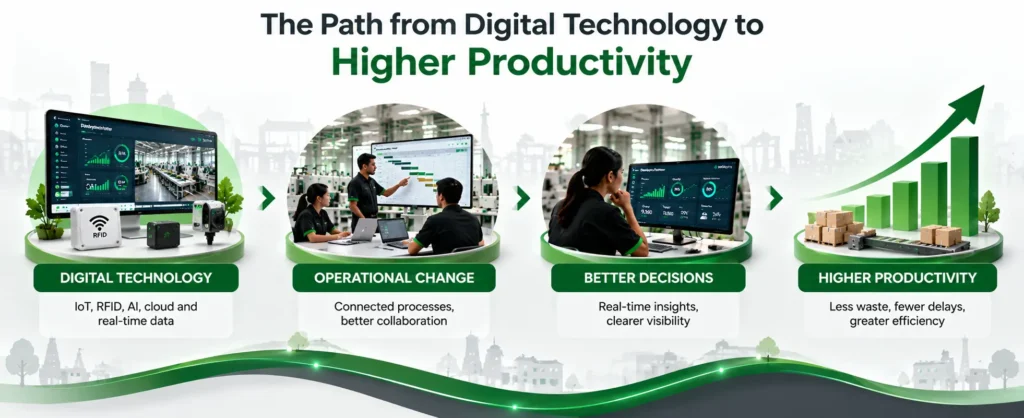
In many instances, sustainable productivity is achieved through a change that came first. You enhance the flow of information. Your teams are more responsive. You find bottlenecks sooner.
You reduce unnecessary waiting. Making decisions based on information you have at hand. You link departments which were working independently of each other. Such shifts may ultimately lead to better productivity and manufacturing effectiveness.
So, digital transformation is basically:
Change is the process. The result is productivity.
Digital transformation offers the means to bridge the gap between the two.
Why Some Digital Transformation Projects Struggle
Buying technology is often easier than changing habits. That’s why some digital projects fail.
A company may invest heavily in software but overlook how employees will actually use it. There may be a lack of understanding among workers of the rationale behind the system. Managers can still request manual reports. Departments can maintain its own information.
In that case, technology is another thing to be done. More than simplifying operations, it has added complexity to the operations.
This is why you need to begin your digital transformation strategy with operational issues. Before you choose your technology, ask yourself what needs to change.
What are your delays and where are they occurring? What information are they missing? What decisions are currently taking too long? What are unnecessary manual tasks? What are the blind spots in teams?
These questions can help focus technology investments on actual business issues. Effective digital manufacturing strategy should be able to actually address the problems of operation rather than just providing more technology.
AI Adds Another Layer to Digital Transformation
AI is bringing a new layer to manufacturing transformation. Old dashboards inform you of what is happening. Advanced systems can help you figure out why this is happening.
AI has the potential to be even more impactful. It can assist in discovery of patterns, pinpointing risks and aiding in quicker decision making. This places AI within the broader digital transformation framework and highlights its role in the manufacturing industry.
AI also requires accurate data, however. AI is less likely to have “useful information” to work with when your production information is disconnected or outdated. That makes connected data an important foundation.
To determine what AI can do for your factory, first consider if your factory is generating meaningful digital data. Digital transformation creates that foundation. Then AI can assist you in getting more out of it.
Digital Transformation Is a Journey, Not a Software Installation
You do not transform a factory by installing one system. Transformation happens gradually.
You digitize processes that are important. You connect information. You improve visibility. You change decision-making. You learn from the results. Then you get even better.
It’s essential to have a philosophy that embraces improvement. Digital transformation in manufacturing should evolve with your factory.
Your production challenges will change. The expectations of the customer will change. Technology will change. Your digital strategy should be able to change with them.
This is also why transforming to Industry 4.0 is not just about the latest tools. It’s the concept of a connected, responsive and data-driven manufacturing operation.
So, What Is the Real Purpose?
Digital transformation in the manufacturing industry is not just about being “more digital. It isn’t all about collecting as much information as you can. It’s not about installing technology just because everyone else is doing it!
The aim is to achieve a more efficient working process. You want problems to become visible earlier. You want information to reach the right people faster. You don’t want your decisions to be based on assumptions.
You don’t want teams to waste time looking for information. Yes, you want to have more productive and efficient operations.
When it’s from sustainable operational change, then it becomes meaningful productivity.
So, productivity or change? You need both.
However, if you’re only interested in productivity, you might just be moving your existing issues online. If you’re thinking about positive change, productivity can become a natural result.
This is when digital transformation is more than just technology. It is a new approach to operating your factory
Final Thought
Digital transformation should not make your factory digital just for the sake of being digital. It should make your factory smarter about how it works.
Technology gives you visibility. Connected data gives you context. Your people turn that information into action. And those actions create productivity.
That is the real purpose of digital transformation in manufacturing.
Frequently Asked Questions
Yes. Digital transformation can support productivity by improving visibility, reducing delays, connecting information, and helping teams make faster decisions.
Common technologies include IoT, RFID, AI, cloud platforms, automation, sensors, analytics, and real-time production monitoring systems.
Digital transformation can improve operational efficiency by connecting production data and reducing manual information flows. It also helps teams identify problems and respond faster.
Projects can struggle when companies focus only on technology and ignore people, processes, training, data quality, or clear operational goals.
They are closely related but not exactly the same. Industry 4.0 focuses heavily on connected and intelligent manufacturing technologies.
Digital transformation also includes changes in processes, people, decision-making, and organizational practices.