
In today’s fast-paced manufacturing environment, relying on outdated tracking methods can limit your factory’s performance. Many apparel manufacturers still depend on manual processes, which often lead to delays, errors, and limited visibility. However, with the rise of smart technologies, a real time production monitoring system is transforming how factories operate. In this article, you will explore how automated monitoring compares with manual tracking, and why modern factories are shifting toward smarter, more efficient solutions.
Shortcomings of Manual Production Tracking
You Deal with Delayed Data
Paper-based tracking of production leaves you a step behind. You do not capture information as tasks occur but at the end of the tasks. Such a slowing down complicates the immediate response to problems. Production losses are already experienced before you can even see reports.
You can count on daily recaps to learn performance. But there is rapid change in production environments during the day. Delays in a single line can have complex repercussions on the whole process. You are not able to react in the proper time without live updates.
This gap is solved with a real time production monitoring system. It gives real time information to enable you to take action when you need it the most. This delayed visibility to live visibility changes enhance operations control.
Errors in the Manual Data Entry
Tracking is manual and requires human intervention. You or your team enter the numbers of production or revise the spreadsheets later. The process enhances the chances of errors. The process of making wrong conclusions and poor decisions can occur even under the influence of minor mistakes.
The various team members can also adopt various recording strategies. This introduces inconsistencies in reports. Consequently, your data will be unreliable. Your planning is hampered when your data is not correct.
This problem can be eliminated through a real time production monitoring system which automates the data collection. It imparts uniformity and precision in the information. This will enable you to make your decisions based on sound judgment rather than guessing.

You Have Whole Factory Visibility
Manual systems fail to give you the whole picture of your operations. Results only come after the production cycles are over. This restricts your performance monitoring in the working hours.
You might not be able to notice poor performance of lines or sluggish processes in time. Problems cannot be spotted in time without visibility. This make gaps in your workflow.
You can have complete visibility with a real time production monitoring system. Real-time monitoring of production activity on all lines is possible. This will keep you updated and ready to act very fast when necessary.
Bottlenecks Are difficult to identify
Slowness in the production bottlenecks slows down the efficiency, and they cannot be easily spotted since they are not manually tracked. After reading reports, you tend to find out about problems. This postpones the solving of problems and impacts production.
You can take hours to analyze data to discover the cause. This procedure is time-wasting and slows down decision-making.
A real time production monitoring system points out bottlenecks in real time. You are able to understand where delays are and rectify them. This enhances workflow and maintains production flow.
No Instant Notifications of Problems
Manual tracking fails to inform you about issues that arise. You rely on employees to report the delay or breakdown. Such a reactive solution causes more downtimes and less efficiency.
When a machine stops, you might not realise at once. Losses in production will go on until somebody tells you. This latency may be expensive.
An alert system is a production monitoring system which sends notifications in real time. It will keep you updated on matters as they occur. This will enable you to act promptly and reduce inconveniences.
Paper Systems restrain Expansion
Manual tracking is more difficult to deal with as your factory grows. The more the data and the more the processes the more complex. It becomes difficult to remain accurate with time.
Manual systems are not able to grow with business. They generate operational inefficiencies and slowness. Scalability is assisted by a real time production monitoring system. It supports increasing data and complicated tasks without difficulty. This will assist you in being efficient as your business expands.
Advantages of Automated Monitoring Systems
You Get Live Time Visibility
The automated monitoring systems provide you with real-time access to production data. You no longer have to rely on the delayed reports or manual updates. Rather, you can observe what is going on at the factory floor in real time. This visibility enables you to be in control of operations.
Real time production monitoring system enables you to monitor machine performance, production output and workflow progress in real time. Slow lines or any other unexpected delays can be easily traced. This assists you in acting before issues become bigger.
You also enhance interdepartmental coordination. All people act with the same live information and it minimizes confusion. Consequently, your production will be better-organized and more efficient.
You Decide More Quickly and Better
Time is a factor in production. You can make decisions faster when you use manual tracking. But with automated systems you have real time insights. This assists in responding promptly whenever things vary.
You can make alterations in production plans in real time using a real time production monitoring system. You are able to handle workloads and correct delays without having to wait till reports come. This enhances your reaction time and maintains the production in good flow.
Quality of decisions is enhanced by better data. Your actions are informed by factual and current information. This minimizes risks and enhances performance in general.
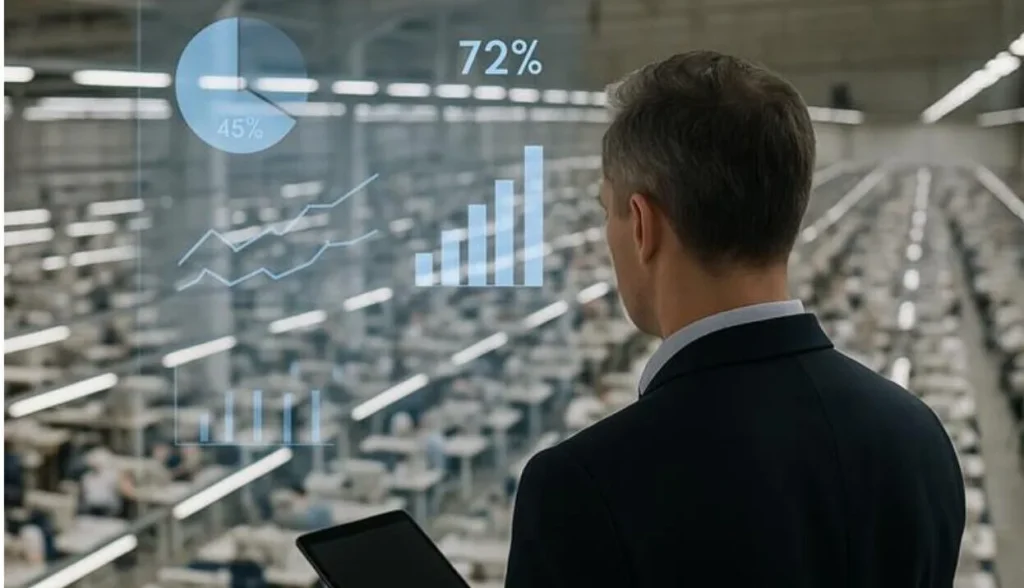
You Enhance Precision and minimize Mistakes
Mistakes are likely to occur in manual tracking. The wrong entries or lack of updates may influence your reports. These are the mistakes that cause misunderstandings and result in bad decisions.
This issue is eliminated by automated monitoring systems. The information is directly monitored on machines and production lines. This provides consistency and accuracy in all reports.
A real time production monitoring system allows you to have confidence in your data. Trustworthy data enables you to evaluate performance better. This results in a better planning and better outcomes.
You Enhance Productivity of the Workforce
Automated systems assist you to know the way your workforce is performing. You are able to monitor operator output and where to improve. This facilitates controlling productivity.
The real time production monitoring system provides a way to tie together the production data and operator performance. This assists you in making equitable incentive plans. Performance is measurable which motivates employees.
You also save time in making manual reports. Your group is more of a production rather than a data entry unit. This enhances efficiency and facilitates management of workflow.
You Prevent and solve problems at the initial stage
Unless the problem of production is addressed, it can readily impact output. Problems are detected in a lagging manner by manual systems. This is addressed through automated monitoring systems which give instant alerts.
Production monitoring system can be in real time and this will keep you informed of the delays or disturbances. You will be able to react instantly and avoid additional losses. This preventive measure maintains stability in operations.
Detection is also early, and this minimizes downtime. You correct minor issues before they affect production goals. This enhances uniformity and assists you to remain efficient.
You Favor Growth that is Scalable
The larger your factory, the more complicated the management is. Manual systems are unable to cope with the growing data and processes. Scaling is less complex with automated monitoring systems.
A real time production monitoring system can be used to control larger operations without the additional effort. You keep control despite increased production. This promotes stability and growth in the long run.
Scalability will also enhance your capacity to address emerging challenges. Adaptation is fast and performance is not affected.
To explore how this works in real factory environments, you can check a smart production tracking system designed for apparel manufacturers.
Real-Time Insights Comparison and Accuracy
You Based on Guesswork With No Real Data
Accuracy is always an issue when you rely on manual systems. You gather information when production work has been done. This results in unexpected differences between actual performance and documented performance.
You may think that your reports are right. Yet, the delay in data entry usually results in out-of-date information. Planning and decision-making are affected by small errors. With time, such inaccuracies decrease your trust of reports.
These uncertainties are removed with a real time production monitoring system. Immediately the data is taken on the production floor. You are always dealing with up to date and dependable information. This assists you in making decisions that are better without second guessing.
Live Data Giving You an Instant Command and Control
Conventional tracking techniques are not real-time. You check performance once in the end of shifts or once reports are compiled. At this point, it is too late to rectify problems.
Delay in production will be noticed once it has impacted output. This defensive mechanism slows down your reaction time. It also enhances the threat of recurrent inefficiencies.
This is transformed by a real time production monitoring system. Production activity can be viewed in real-time. This will enable you to react instantly to latency or performance degradations. Real-time insights enable you to be in charge rather than being reactive.
You Enhance the Quality of Decisions with Live Data
Proper data is important in decision making. Your decisions are weak when you have delayed or wrong information. You can do production on the basis of old figures causing inefficiencies.
You also waste time in checking on reports. This slows the working process and minimizes productivity. You spend time correcting data problems as opposed to making improvements.
Using real time production monitoring, you use live and accurate data. This enhances the quality of your decision. It allows you to change production plans, balance lines and allocate resources. The best decisions bring about the best results. You minimize mistakes, enhance productivity, and attain high performance.
Paper-Based Systems Decrease the degree of insight
Basic information is provided by manual tracking. You can be aware of the number of units produced, but not the efficiency with which they were produced. This restricts your knowledge on production performance.
It is difficult to monitor operator effectiveness or machine use. This complicates the determination of areas of improvement. Consequently, you lose chances to streamline operations.
A time and place production monitoring system is more insightful. Performance can be analyzed at all levels. Everything is measurable, whether it is individual operators or complete production lines.
This insight will assist you to recognize patterns and trends. You are able to identify recurring problems and take corrective action. In the long run, this results in ongoing enhancement.
You Minimize Delays and Enhance Responsiveness
Late revelations usually result in late responses. The later you find out the problems, the more difficult it is to fix them. This impacts on your production schedules and delivery promises.
You also might not be able to produce regularly. Minor delays can cause the ripple effect throughout the production process.
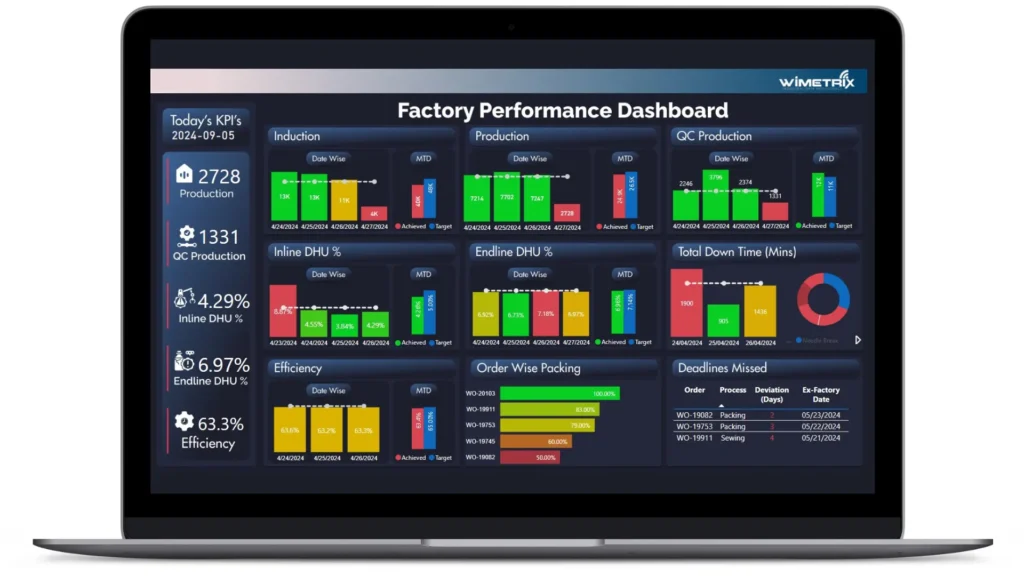
Having a real time production monitoring system you are informed immediately. You are able to take action in matter of time. This will help minimize delays and enhance your responsiveness. Quicker replies can assist you in running a smoother operation. You are able to meet production goals and make orders on time.
The reason why Factories are Shifting to Smart Systems
You Need Faster and Smarter Decisions
Factories today cannot afford to be slow in decision-making. Markets are dynamic and customer demands continue to rise. Thus you require mechanisms that can aid you to react immediately.
Manual processes tend to slow down decisions as they do not have the data in real time. This leads to you responding rather than anticipating. This brings about inefficiencies in your production lines.
Nevertheless, intelligent systems transform the manner in which you work. You can get real-time data, with a real time production monitoring system. This will enable you to make quick and smart decisions on a daily basis.
Additionally, you minimize guesswork and make use of precise insights. This contributes to planning and performance in terms of production.
You Desire Greater Exposure in Operations
Limited visibility is one of the largest problems in the manufacturing process. I am not sure that you know what is going on the factory floor at any given moment. As a result, minor problems may not be noticed until they escalate into big problems.
Conventional means give you slow information and this limits your control. On the contrary, intelligent systems provide 100 percent visibility of all processes.
You can monitor production activity in real time with a real time production monitoring system. You are able to view machine performance, operator efficiency, and progress of the workflow at a single location. Consequently, you keep up to date and can act promptly. Such a visibility will assist you in running things efficiently and without a problem.
You Seek to Cut Down on Downtime and Enhance efficiency
The downtime has direct impact on your productivity and profitability. Delays of even a small size can translate into huge losses in the long run. Thus, the minimization of the downtime comes to be one of your priorities.
Problems are not always identified early when using manual tracking methods. This means issues just escalate even before your eyes. This reduces your production and output. This problem can be resolved with the help of smart systems. The real time production monitoring system notifies you immediately there is a delay. This enables you to correct the problems instantly.
This way, you save on time and increase productivity in your factory. Your production lines will be more smoothly running, and the performance of your whole performance gets better.
You Require Accurate and Reliable Data
Effective production management requires accurate data. But frequently, the manual systems cause errors and inconsistencies. This renders it challenging to believe your reports.
Bad decisions are made with inaccurate data and it may negatively affect your operations. So you require a system that will be reliable.
Smart systems will offer automated data collection and this enhances accuracy. You are always dealing with trustworthy information with a real time production monitoring system. This will assist you in planning and preventing expensive errors. This translates to more stable and efficient operations.
You Would Like To remain competitive in the Industry
The manufacturing sector is growing increasingly competitive. There are already numerous factories that embrace smart technologies. So, to be competitive, you need to improve your systems.
Unless you stick to the old-fashioned techniques, you can be left behind. Your rivals will be more efficient and quicker. You enhance your production abilities by changing to smart systems. A production monitoring system in real-time assists you in streamlining the processes and achieving improved outcomes.
In addition, you will be able to fulfill customer expectations in a better way. This enhances your market standing and contributes to the growth in the long run.
Conclusion
Manual systems cause delays, errors and poor visibility, which influence your factory performance. This leads to slowness and inefficiency of decision-making.
Nevertheless, intelligent systems transform all this. By having an actual production tracking system, you experience precise data, real-time understanding and improved control. This means that you are minimizing downtime, enhancing productivity and making quicker decisions.
Finally, the transformation to smart systems will assist you in operating without any hiccups and being competitive in a rapidly evolving industry.